Today, Three is one of the largest mobile network operators in the UK, although its history is relatively short compared to some of its competitors.
The company was launched in 2003 as the first 100% commercial 3G network in the UK (hence the brand’s name). Three has since advanced significantly with the start of 4G and 5G networks. In 2022, the provider announced its intention to decommission the 3G by the end of 2024, allowing the reuse of these frequencies for 4G and 5G services. The decision increased the overall data speed but led to reduced coverage in some areas.
The turning point came in 2025 when Three UK and Vodafone UK merged to create VodafoneThree. Two networks are now being gradually integrated: customers of Three and Vodafone have access to a common structure and an additional spectrum of frequencies.
All these changes have improved coverage and capacity in many areas, but since the quality of the connection can vary greatly depending on a lot of factors, this means that not every Three customer will have a stable signal. Some users still look for ways to improve their Three UK mobile signal — and this is exactly what we are going to discuss in this article.
mobile signal booster Nikrans LCD-300GD
+ FREE Lightning Surge Protector
for United States
4.9/5 — 278 ReviewsThree in 2026: What Changed After the VodafoneThree Merger?
The merger with Vodafone is an important change for Three customers. Thanks to the ongoing implementation of Multi-Operator Core Network technology, Vodafone and Three users can automatically connect to each other’s networks at no additional cost. As a result, the coverage area has expanded significantly, and this has made it possible to provide connectivity in regions that were previously underserved or not served at all, and the capacity has also increased.
4G and 5G speeds have enhanced, while delays have considerably decreased and reliability has improved. Due to this, data traffic growth has remarkably exceeded the average figures for the UK.
If you want to know more about how the merger may affect coverage, frequencies and mobile services, read our VodafoneThree merger and UK signal changes article.
It's sad, but better coverage doesn’t necessarily mean better reception inside every home or office. So, even as the VodafoneThree network develops, some customers may continue to complain about Three signal poor indoors. Let's look at why.
Three Services in the UK: What About Signal Quality?
Three offers a range of mobile services, including phone calls and 4G / 5G connectivity. But when it comes to signal quality, the experience can be quite different from one customer to another. A connection that works perfectly well in one location may become noticeably weaker just a few streets away — or even after you walk from outside into a building.
And this is an important point: poor reception doesn’t always mean that there is something wrong with the operator's network. Your phone's signal must travel the distance to the cell tower and obstacles often appear in its path. If outside the signal may weaken due to distance or surrounding terrain (e.g. hills and buildings), indoors it can be significantly degraded by thick walls, reinforced concrete, metal, low-emission glass and even the location of the room.
So, if you are dealing with a weak Three signal, it makes sense to find out where the problem starts. If there is usable signal outside but it becomes weak or unstable indoors, a correctly selected Three signal booster can be one of the ways to improve the situation. Let's see how it works.
Three Signal Booster: How It Solves Connection Issues
Problems with mobile connectivity can have different causes, so the right solution depends on the actual situation. If the Three network is available outside but becomes weak or unstable inside a building, a mobile signal booster can help improve supported frequencies and provide a better reception in places where you need it.
It is important to understand how a Three signal booster in the UK improves the coverage. It doesn’t create a new mobile network or generate a signal where none exists. Instead, it receives an existing outdoor signal, amplifies the frequencies supported by the device and redistributes the improved coverage indoors.
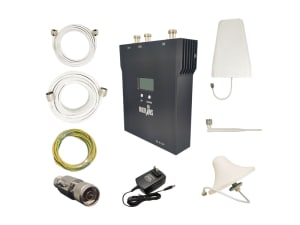
A kit of Three mobile signal booster UK usually includes three key elements:
- A booster unit, which improves the signal at the supported mobile frequencies;
- An outdoor antenna, which receives the available signal outside the building;
- An indoor antenna, which redistributes the amplified signal inside the required area.
When choosing a Three signal booster, pay particular attention to frequency compatibility. Repeaters operate with specific frequency bands, not just a specific operator. This means that a model shouldn’t be selected simply because it is described as a “Three amplifier” or “VodafoneThree signal booster".
The frequency bands used for mobile calls, 4G and 5G can vary depending on location and network configuration. A Three phone signal booster will improve 4G and/or 5G if the carrier uses a frequency supported by that particular model. If you aren’t sure which amplifier option is suitable, please use the Helper tool to check compatibility, or contact us — our managers can help choose the right booster model for your location and requirements.
Installation Tips for a Three Signal Booster
Modern mobile signal boosters are usually designed for self‑installation. This is quite simple if you follow the instructions for each model. The final result, however, is highly dependent on antenna placement.
Before finalizing the installation of the outdoor antenna, check the signal in several places outside the building and select the location with the strongest and most stable signal. Depending on the property, this may be on the roof, an external wall or another elevated spot.
The indoor antenna should be placed where improved signal reception is required, and there should be a sufficient distance between the indoor and outdoor antennas. This helps prevent feedback between them and allows the system to operate correctly. The exact installation and antenna separation requirements vary depending on the kit you choose, so always follow the instructions.
After installation, test the signal before finally securing all cables and antennas. If the improvement is weaker than expected, checking the outdoor antenna position and direction is a good place to start.
How to Choose the Best Three Mobile Signal Booster?
Now let's look at the currently available Three booster options. They vary in price, effectiveness, and reliability. We'll analyze the pros and cons of each, giving you an excellent opportunity to choose the one that's best for you.
Specification »
Reviews »
Specification »
Reviews »
Specification »
Reviews »
DIY Three Mobile Signal Booster
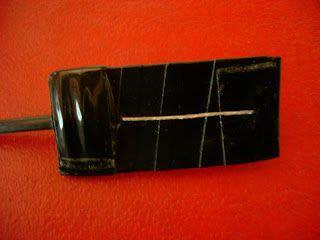
For those who are fond of DIY tasks, you may like this idea as well. This project doesn’t require huge investments. However, you need to have some technical skills if you want to build a device that will work. Moreover, the efficiency and security of your booster will be only your responsibility.
So, what do you need to stabilize your Three mobile signal?
- iron wire (35-50 cm)
- one nut
- one bolt
- two connector blocks
- coaxial cable
- one pipe (can be the cheapest water pipe)
- one plastic container.
Earlier we published step-by-step instructions that you can use as your guidelines. However, we strongly recommend that you think carefully before spending time building a device that may fail and for which we cannot be held responsible. But we’d like to be objective that’s why we’ve detected both the pluses and minuses of this project.
-
Pros of a DIY booster:
- Low investments
- Interesting process
-
Cons of a DIY booster:
- Necessity to have tech skills
- Time-consuming project
- Safety and efficiency are not guaranteed
If you want to try making a booster yourself, we sincerely wish you the best of luck. But if you aren’t ready to accept this challenge, we have some other options for you.
Cheap “No-Name” Three Mobile Signal Booster
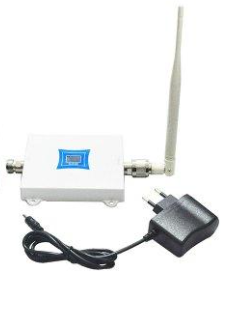
It is easy to find inexpensive mobile signal boosters on large online marketplaces. At first glance, some of these devices may seem attractive, especially if the price is considerably lower than that of better-known models. However, price alone doesn’t tell you whether a booster will be suitable for your Three signal problem.
The main thing to check is the specification. The booster must support the frequencies available in your region. The product description should clearly indicate which frequency bands it works with. It is also worth checking what is included in the kit, whether installation instructions are provided, what warranty or return conditions apply, and whether technical support is available if something goes wrong.
-
Pros of a no-name booster
- Lower initial price
- Wide choice online
-
Cons of a no-name booster:
- Specifications may be unclear or incomplete
- Compatibility can be difficult to verify
- Limited installation or technical support
- Warranty and return conditions can vary considerably
A low-cost booster is not necessarily a poor choice, but it requires more careful checking before purchase. In particular, don’t rely only on labels such as “Three booster”, “4G booster” or “Three 5G booster” — make sure the supported frequency bands match what you actually need.
Dual-Band Three 4G Booster: Nikrans LCD250-4G-D

The Nikrans LCD250-4G-D signal booster supports two frequency bands: 800 MHz and 1800 MHz. It provides coverage in areas up to 2,700 ft² (250 m²) being a top-rated choice among Three signal boosters for home and office.
Both supported frequencies may be relevant for Three customers who want to improve their 4G quality. The 1800 MHz band has become particularly interesting since the creation of VodafoneThree: following the merger, additional 1800 MHz spectrum was activated on compatible Three sites to increase 4G capacity.
The 800 MHz band can be particularly useful in rural and more remote areas. Lower-frequency signals generally travel farther and penetrate buildings and other obstacles better than higher-frequency signals. Thanks to this, the 800 MHz frequency is well‑suited for providing 4G coverage over large areas and can also be useful for indoor signal reception if a compatible 800 MHz signal is available.
This doesn't mean, however, that the LCD250-4G-D will improve every Three connection. The booster works with two supported frequencies, so its suitability depends on which bands are available where it is installed. If there is a usable outdoor signal on a compatible frequency, the device amplifies it and redistributes the improved signal indoors, making it an excellent choice as a Three signal booster for office or home.
The LCD250-4G-D also has an LCD screen that provides useful information about the system’s operation and installation. The booster kit is designed to be DIY-friendly. It includes everything you need to install the device, it is only necessary to follow the instructions from the user's manual.
Benefits of Nikrans LCD250-4G-D:
- Supports 800 MHz and 1800 MHz 4G frequencies
- The 800 MHz band compatibility offers significant advantages for rural and remote areas
- Coverage of up to 2,700 ft² (250 m²)
- LCD screen
- DIY-friendly installation
- CE and RoHS certification
- 3-year warranty
The main limitation of this model is its dual‑band functionality. If the signal you need to amplify is transmitted at a frequency that the model doesn't support, it is better to choose a more powerful multi‑band booster.
3-Band Booster for Calls and Mobile Internet: Nikrans LCD-300GDW
If two frequency bands aren’t enough for your situation, the Nikrans LCD-300GDW offers broader possibilities. This model works on 900 MHz, 1800 MHz and 2100 MHz and is designed for areas of up to 3,300 ft² (300 m²).
The wider frequency range is particularly relevant now that Vodafone and Three operate within VodafoneThree. As the two networks become increasingly integrated, customers can benefit from access to a broader combination of network resources and frequencies. For this reason, it is better not to think of 900, 1800 or 2100 MHz as frequencies permanently assigned to just one mobile technology.
Depending on the local network configuration, the LCD-300GDW can help improve calls, 4G and/or 5G when these services are provided on one of the supported frequencies. The 1800 MHz band is widely relevant to 4G, while the supported 900 MHz and 2100 MHz bands provide additional possibilities where VodafoneThree uses these frequencies for compatible services.
This flexibility makes the LCD-300GDW an interesting option when several supported frequencies need to be amplified within the same property. It can be used at home and in the office, and its declared coverage area helps resolve issues with poor Three signal in spaces that are somewhat larger than LCD250-4G-D.
Benefits of Nikrans LCD-300GDW:
- Supports 900 MHz, 1800 MHz and 2100 MHz
- Can help improve both calls and mobile data on supported frequencies
- Can improve 4G and/or 5G if these technologies use compatible frequencies at your location
- Coverage of up to 3,300 ft² (300 m²)
- Free lightning protection
- CE and RoHS certification
- 3-year warranty
The LCD-300GDW gives you more frequency flexibility than the LCD250-4G-D, but it shouldn’t be called a universal solution. Compatibility still depends on the frequencies available in your location and the services carried on those bands.
6-Band Booster for Wider Network Compatibility: Nikrans NS-300-Smart+5G
For customers who need support for a much wider range of frequencies, there is the Nikrans NS-300-Smart+5G. This model operates on 700 MHz, 800 MHz, 900 MHz, 1800 MHz, 2100 MHz and 2600 MHz, with a declared coverage area of up to 3,300 ft² (300 m²).
The main Nikrans NS-300-Smart+5G advantage is the number of supported frequency bands. As VodafoneThree continues to integrate the networks of named operators, access to multiple bands can be useful when calls and mobile data are made on different frequencies.
The NS-300-Smart+5G booster can improve the quality of calls and mobile internet when the required service is transmitted on one of the supported frequencies. This is especially important for the fifth generation signal. The presence of the word “5G” in the model name doesn’t mean that the repeater amplifies any given signal. The booster’s operating frequency must match the 5G frequency band used by the operator in a specific region. This is when we talk about frequency compatibility.
The six‑band configuration of the model means that the NS-300-Smart+5G can not only boost Three mobile signal but also improve the frequencies used by other compatible mobile operators in the UK. This is especially useful in a home or office where family members, employees or visitors use SIM cards from different networks.
The availability of operating frequencies of 700 and 800 MHz is also helpful in areas where coverage is provided at lower frequencies. LF signals are especially valuable in rural areas, away from cellular towers, in complex indoor environments due to the fact that they travel farther and penetrate obstacles better than high‑frequency signals.
Like the LCD-300GDW, the NS-300-Smart+5G comes with free lightning protection for the booster system.
Benefits of Nikrans NS-300-Smart+5G:
- Operates at 700, 800, 900, 1800, 2100 and 2600 MHz
- Wide-frequency support for various network conditions: calls, 4G and/or 5G
- Can work with compatible frequencies used by different UK operators
- 700 and 800 MHz compatibility can be especially useful in rural and remote locations
- Coverage of up to 3,300 ft² (300 m²)
- Free lightning protection
- CE and RoHS certification
- 3-year warranty
Of the three models considered here, the NS-300-Smart+5G provides the broadest frequency support. However, a greater number of supported bands doesn’t automatically mean better reception. The result still depends on having a usable outdoor signal, as well as on the frequencies available at your location, antenna placement, building layout and installation quality.
If you aren’t sure whether you need a two-, three- or six-band booster, use the Helper tool to check compatibility. Our managers can also help choose the right booster depending on your operator, location and the signal you want to improve.
What About a Three Signal Booster for a Car or Motorhome?
Weak Three reception can also become a problem when you are travelling, especially on rural roads or in areas far from mobile masts. In this case, a vehicle signal booster is a more practical choice than a system designed for a house or office.
For Three customers, we suggest considering two models: Nikrans LCD-GL-Drive for cars and Nikrans LCD-GL-Camp for camper vans and motorhomes. Both operate on 800 MHz and 900 MHz and have a declared coverage area of up to 300 ft² (20 m²).
Nikrans LCD-GL-Drive is a more suitable option for a car, van or similar vehicle. Its compact design includes an outdoor car antenna that receives the available mobile signal, and an indoor antenna that redistributes the amplified signal inside the vehicle. The 800 MHz support can be particularly useful when travelling through rural and more remote areas, as lower-frequency signals generally travel farther than higher-frequency ones.
At the same time, the Nikrans LCD-GL-Camp is designed specifically for campers and motorhomes. It also supports 800 and 900 MHz bands, but has a more flexible antenna configuration, including an external Yagi antenna with a 10 m cable, as well as power options from car battery and AC mains. This makes it better suited to a larger vehicle that may also remain parked at a campsite for longer periods.
For Three users, it’s important to remember that both of these models can resolve signal issues on supported frequencies if there is a usable outdoor signal and VodafoneThree utilizes the 800 and/or 900 MHz frequency in the area where you are.
So, the choice is quite straightforward: LCD-GL-Drive is the more practical option for everyday car use, while LCD-GL-Camp is better suited to camper vans and motorhomes. If you’re not sure which frequency VodafoneThree uses in a particular area, ask our managers to help with the choice of the right booster.
Frequently Asked Questions
Why is my Three signal good outside but poor inside my house?
This is a common indoor reception problem. Walls, reinforced concrete, metal structures, low-E glass and other building materials can weaken a mobile signal considerably before it reaches your phone. The position of the room and the surrounding buildings or terrain can also make a difference.
If there is usable Three signal outside but it becomes weak indoors, a compatible signal booster can help improve supported frequencies and redistribute the amplified signal inside the building.
Why do I have Three 4G or 5G but very slow internet?
Seeing 4G or 5G on your phone doesn’t necessarily mean that the connection will be fast. Slow mobile data can be caused by weak signal, network congestion, disabled data transfer, APN settings failure or other conditions.
A booster is useful when poor performance is related to weak reception on a supported frequency. If your phone already has a strong signal, but the data transfer speed is still very low, the problem may not be related to the signal level, and a booster won’t help solve it.
Why has my Three signal changed since the Vodafone merger?
Vodafone and Three are now operating within VodafoneThree, and their networks are being progressively integrated. As this work continues, the type of signal or frequencies available to a customer in a particular location may change.
Some users therefore notice differences in coverage, speed or whether their device connects to 4G or 5G. However, a change in reception at an individual address shouldn’t automatically be attributed to the merger, as local network conditions, devices and other factors can also affect performance.
Does the VodafoneThree merger mean my Three SIM can use Vodafone signal?
VodafoneThree is gradually integrating the networks of both operators, and their customers can benefit from a broader, unified network. However, this doesn’t mean that every Three SIM card can freely switch between all Vodafone and Three frequencies.
For signal-booster selection, the practical rule remains the same: check which frequencies are available at your location and make sure the selected booster supports them.
Why did my Three phone switch from 5G to 4G?
Your phone doesn’t always remain connected to 5G. The network and device select the available connection according to factors such as coverage, signal conditions, network configuration and capacity. As you move around, or as network conditions change, the phone may switch between 5G and 4G.
If 5G is weak indoors but a stronger compatible signal is available outside, a suitable booster may help, but only if the model supports the frequency used for that service.
Will a Three signal booster work if I have no signal outside?
A mobile signal booster needs an existing usable signal to amplify. It can’t create a Three network signal from nothing.
If you have no usable signal anywhere outside the property, don’t choose a booster based only on its advertised coverage or number of bands. Use the Helper tool to check compatibility or contact our managers so that the situation can be assessed before you buy.
Will a Three signal booster improve both calls and mobile internet?
It depends on the frequencies supported by the booster and how those frequencies are being used in your location. A model may improve calls, 4G and/or 5G when the required service operates on one of its supported bands.
This is why two boosters described as suitable for Three can provide different results at the same address. Frequency compatibility matters more than the operator name on the product description.
How do I know which Three signal booster I need?
Start by checking where the problem occurs. If reception is good outside but poor indoors, note which service you want to improve — calls, mobile data or both — and consider the size of the area that needs coverage.
The next step is to match the available signal frequencies to the booster. You can use the Helper tool to check compatibility, or our managers can help choose the right booster depending on your operator, location and requirements.
Conclusion
So, which Three signal booster should you choose? It depends on the connection problem you want to solve, the frequencies available in your region, the area where you need to improve the signal, and your budget.
A booster can help improve supported frequencies if there is a usable outdoor signal, but the right model will depend on your operator, location and requirements. A model with more bands is not necessarily the better choice if you don’t need those frequencies.
If you are ready to choose, take a look at our Three signal boosters. All Nikrans boosters are CE and RoHS certified and come with a 3-year warranty.
And if you aren't sure which model is suitable, use the Helper tool to check compatibility or contact our managers via chat, phone or email. They will help you choose the right booster.
More information on repeaters for other UK mobile providers — EE mobile signal booster and О2 mobile signal booster.